Overview
Lare is a social platform for Leetcode. It logs every problem you open and every submission you make, so you can share your solution, follow friends and see how everyone is progressing.
It’s packaged as a desktop app (macOS and Windows) and a Chrome extension, and you sign in inside the app, so there’s no separate account to make.
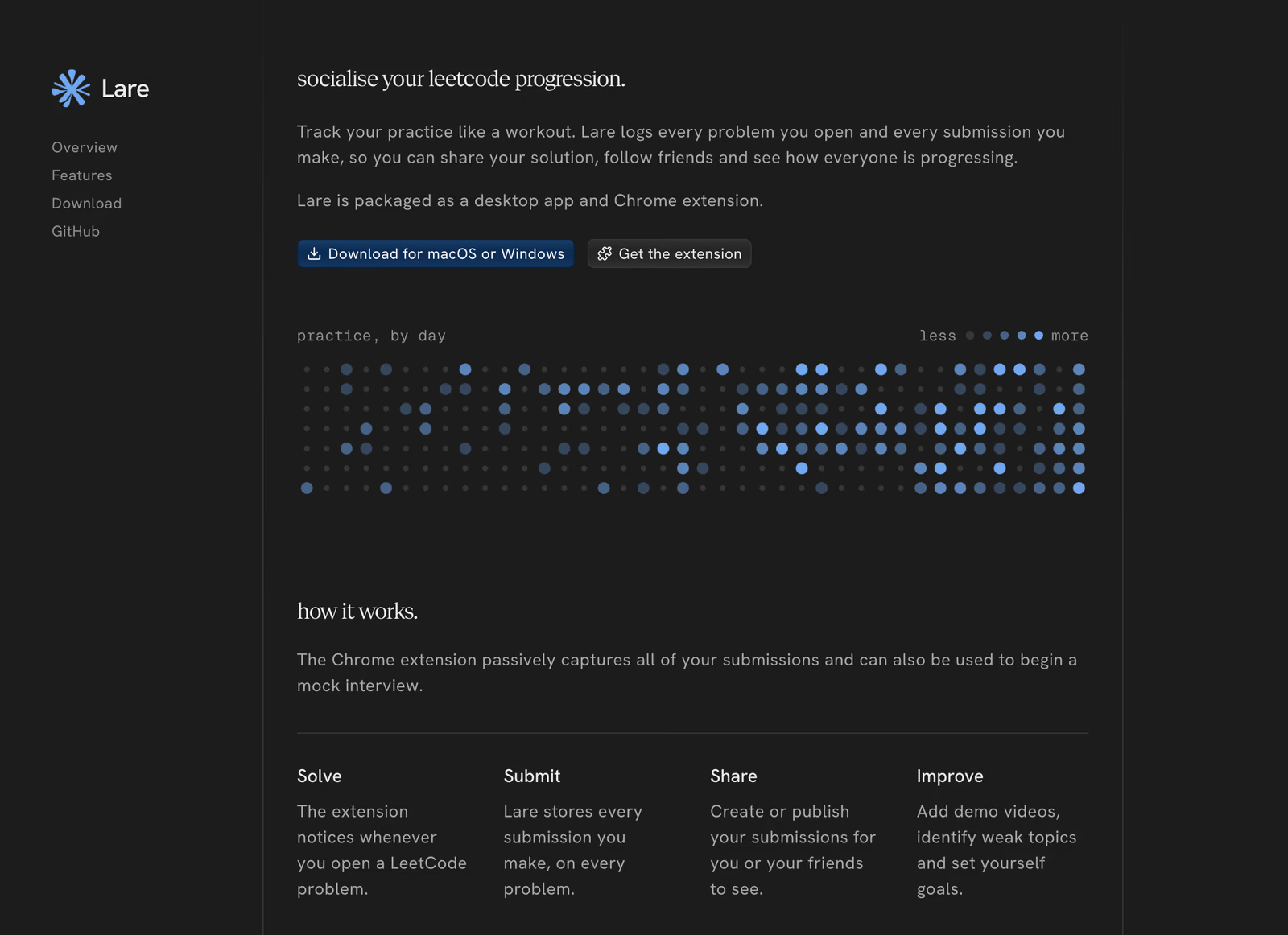
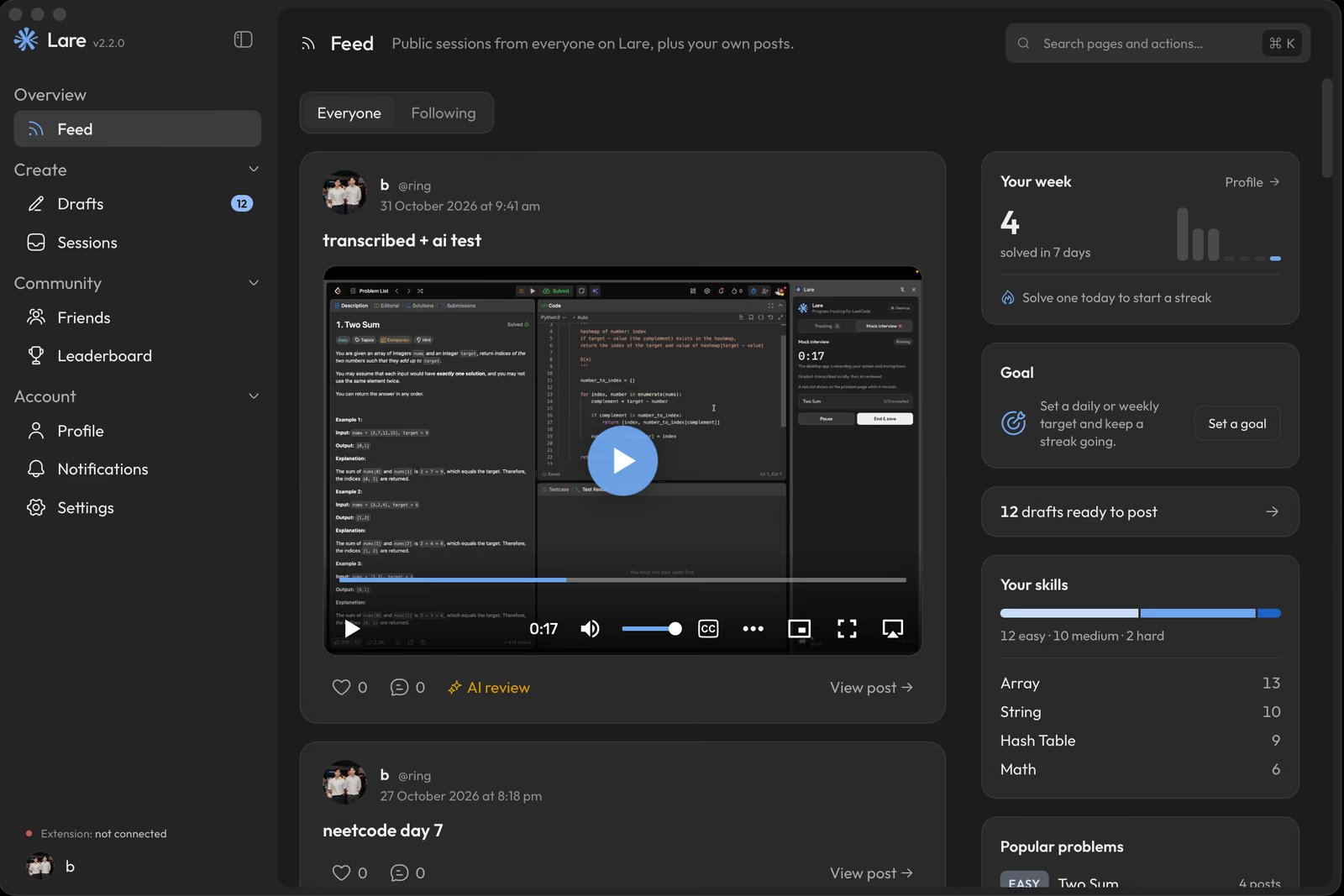
The idea is to treat practice like a workout: a session on its own is easy to forget, but a run of sessions joined together shows you the line going up. Seeing friends’ progress makes it easier to keep showing up.
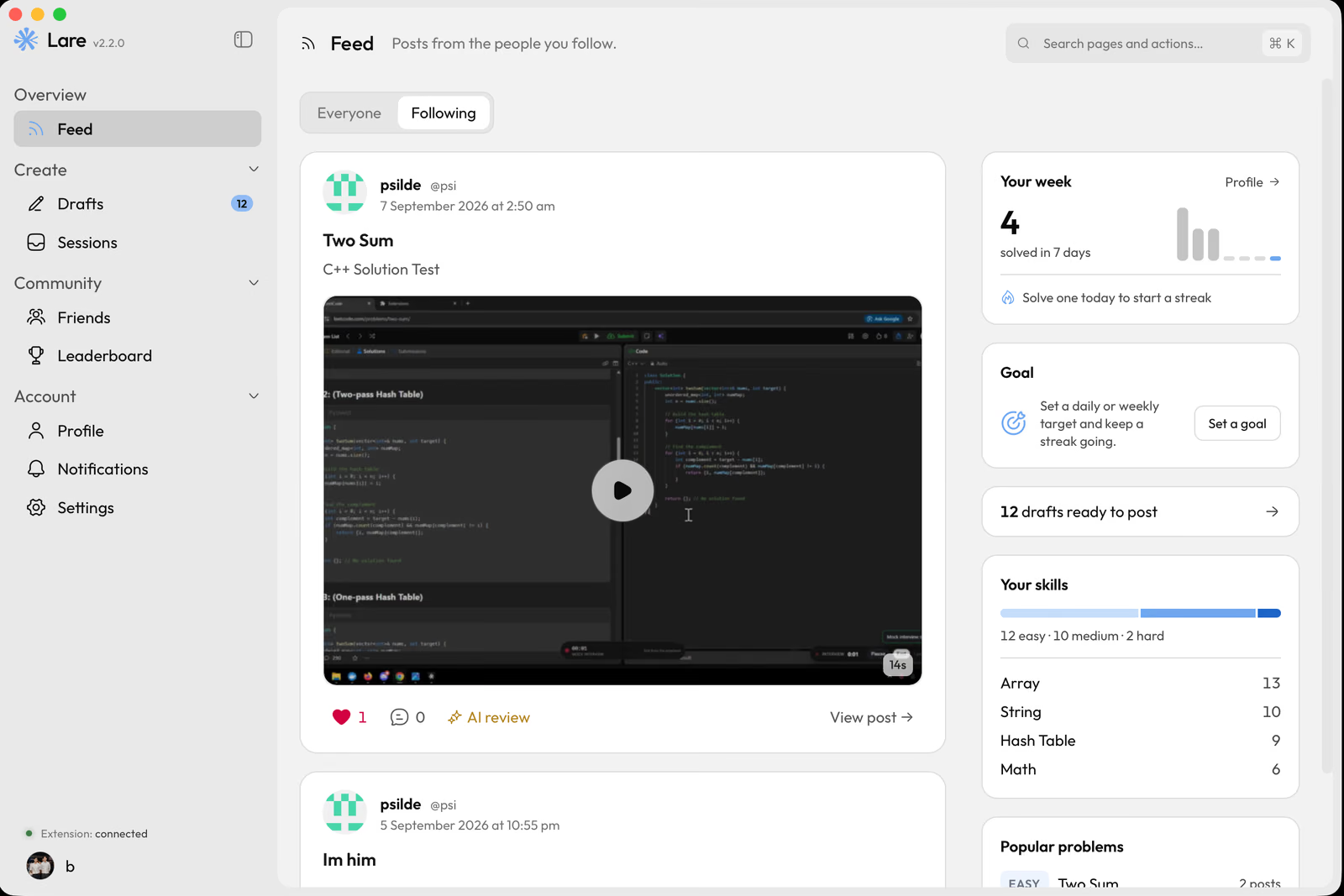
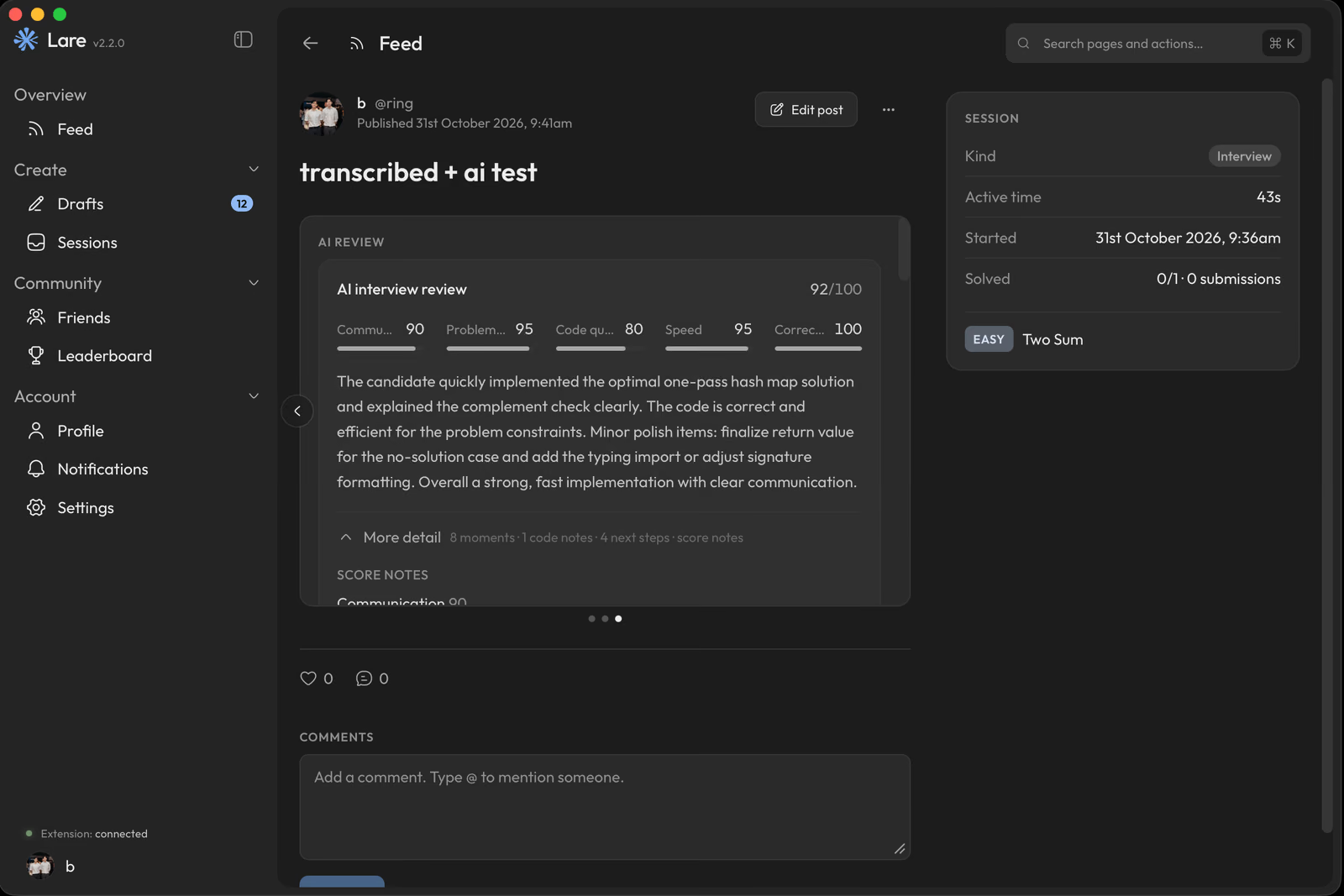
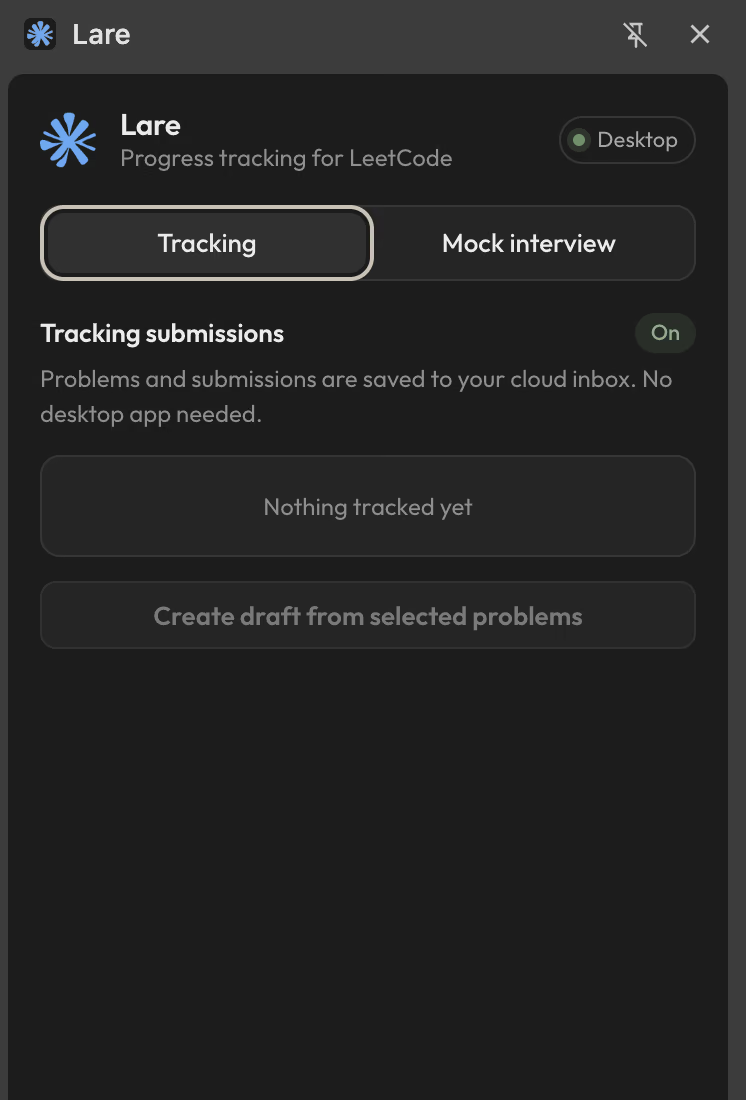
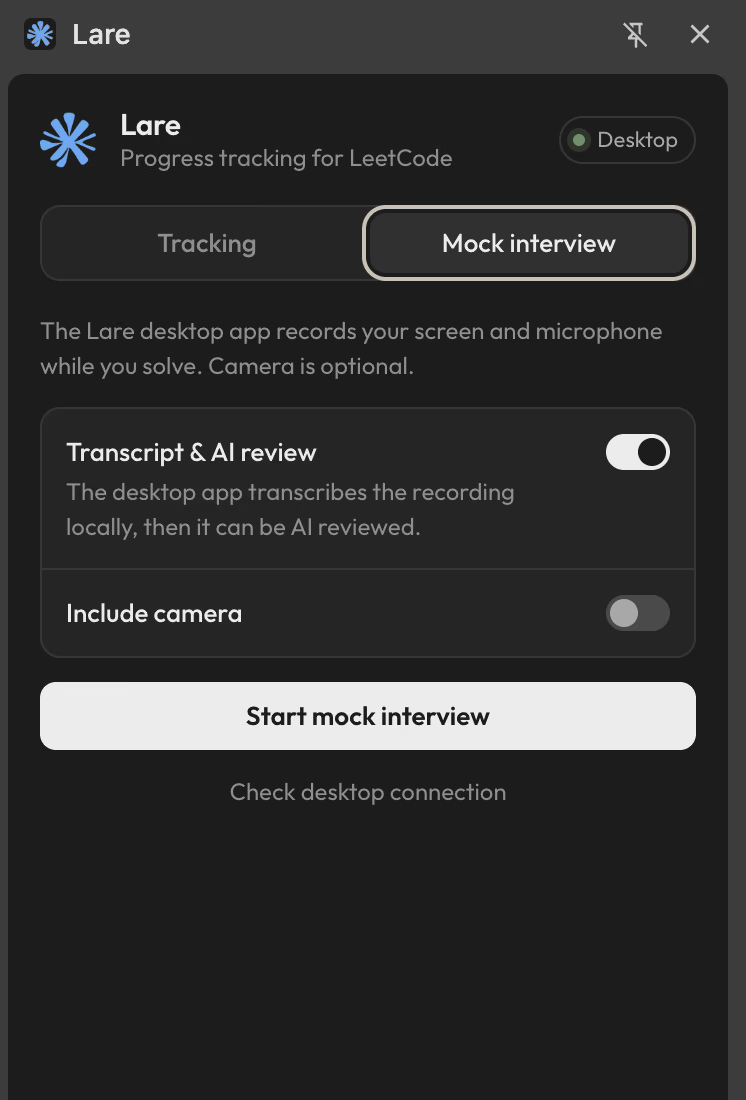
The Chrome extension passively captures your submissions, and can also start a mock interview: the desktop app records your screen and microphone while you solve, transcribes it locally, then an AI review scores the session.

Background
A few months after building Slackbuilder, I saw a video titled ‘Challenging Leetcode’s top user.’ (source). The video mock-interviews this guy named Ishaan who has solved almost all of Leetcode’s problems.
What stuck out to me was his intuition, approach and accuracy. Given that he had done so many problems, his intuition as to what data structure to use (in this case a segment tree) was almost immediate. He also communicated his thoughts clearly and solved the problem first try, in one submission after running a few tests.
I felt very impressed and it shocked me when, around timestamp 22:30 in the video, Ishaan showed his internal practising tool, which ultimately became my inspiration to create Lare.
I was also inspired by Hevy, a social gym app that I use often, which is quite coincidental since Leetcode is often referred to as the ‘gym for programmers’.
Random
-
I worked on Lare with one other collaborator, Paul (LinkedIn), a friend from Perth who I met on a video game.
-
Claude in Chrome inspired me to use the Side Panel API for Lare - which if I’m honest I don’t think is the ideal design, but I wanted to try something different…
-
This project is structured using three repositories:
lare(public),lare-dev(private), andlare-landing(private). The lare repository acts as a snapshot of lare-dev. I structured it in this way to keep a clean public facing commit history as well as allow for lare-dev to skip CI, which helped Paul and I review each others’ work much faster. -
We use Coderabbit to review some of our releases; I can’t speak much as to how useful it’s been due to the scale of this project, however I definitely see it’s value in a prod environment.
-
I made the name of the app by combining ‘leetcode’ and ‘share’
-
I asked Higgsfield to make me a logo and picked the first thing it spat out, which, yes. I agree it looks like Claude.